


As regenerative medicine continues to advance, the logic of treatment is also quietly changing. In the past, we were familiar with the path: drugs are responsible for "adjusting parameters", so that inflammation, blood glucose, blood pressure to maintain in the safe zone; surgery is responsible for "repairing the structure", the resection is resected, the replacement is replaced.
而如今,stem cells的加入,让医学多了一块全新的拼图——它能带来一种独特的“修复力”。在一些疾病中,既能唤醒身体的自我修复潜能,也能补齐缺失的细胞功能,为患者带来新的可能。
Healthcare 3.0: from control to repair
The strength of traditional therapies lies in their control, which stabilizes the disease and gives a sense of security. But in most cases, they address "suppression" and "maintenance". The emergence of stem cells opens another door: firstly, to adjust the imbalance of the microenvironment, and then to create conditions for repair and regeneration of tissues; in some diseases, it can also directly replace the missing functional cells.
This means that medicine is moving from "long-term suppression of symptoms and structural intervention" to "regulating the environment, promoting repair and rebuilding functional balance". Drugs, surgery, rehabilitation and stem cells, like different roles, are beginning to form a new set of "combinations", the goal is not only to stabilize the condition, but also to make the health more complete and more sustainable.
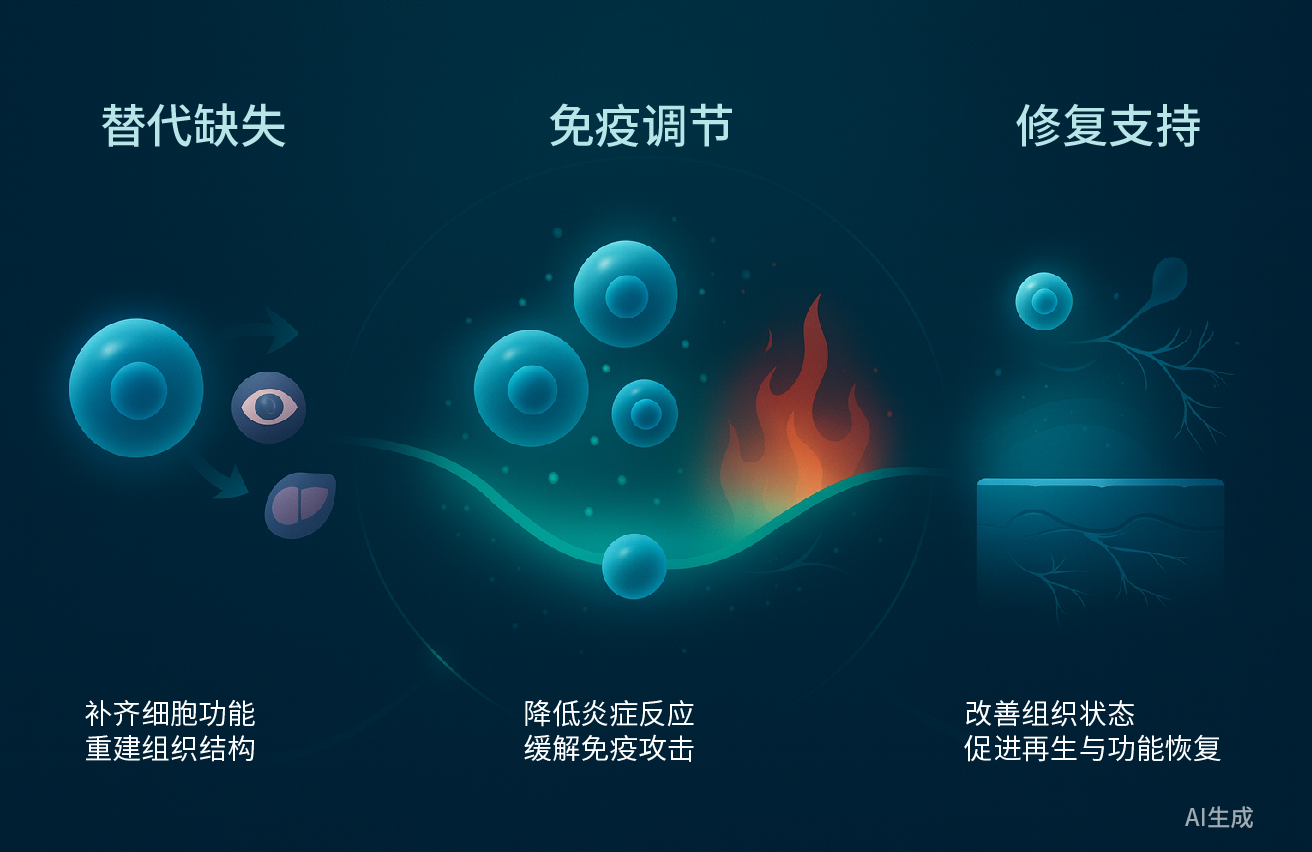
Stem Cells' "Unique Tricks"
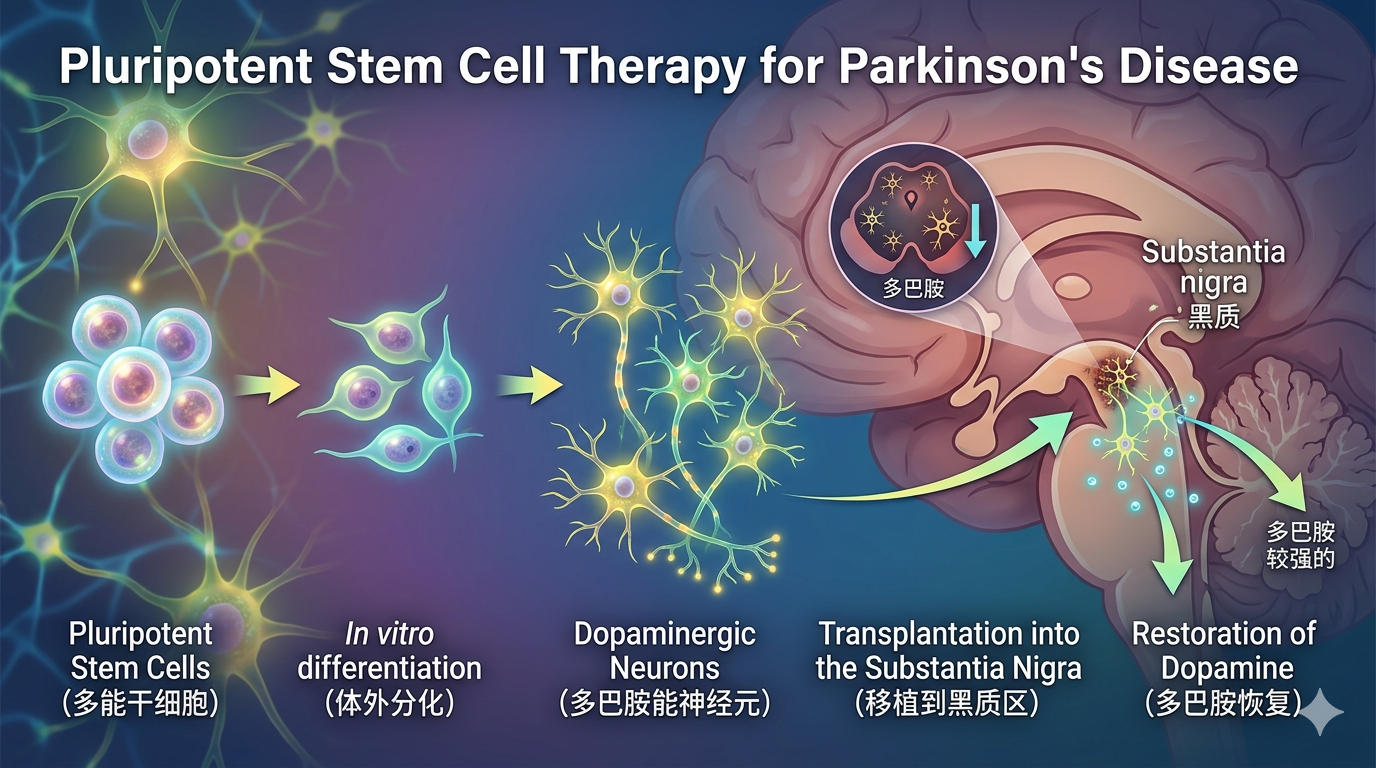
Substitution: make up for what's missing.corneal limbal stem cellcan reconstitute the corneal epithelium; stem cell-derived or engineered islet cells with the goal of restoring insulin secretion; differentiated and matureddopamine neuronTransplantation, on the other hand, attempts to patch back key neurons for Parkinson's disease.
Immunomodulation: To "put the brakes" on the body when the immune system is out of control.mesenchymal stem cell MSC (in cell biology)The ability to modulate immunity and mitigate inflammatory storms through factors and exosomes brings new solutions to critical situations such as graft-versus-host disease.
Repair support: not replacing parts, but improving the environment. Like little mobile pharmaceutical factories, stem cells secrete a wide range of active substances that help reduce inflammation, promote angiogenesis and tissue repair, showing potential in chronic diseases such as osteoarthritis and heart lesions.
Typical Disease Scenarios
Corneal limbal stem cell deficiency
When the cornea loses its ability to regenerate due to chemical burns, etc., it is difficult to rebuild the clear corneal epithelium by conventional means. Corneal limbal stem cell transplantation allows the "window of transparency" to be restored, helping patients regain their vision.
Type 1 diabetes
While long-term glucose control is a must for patients, stem cell therapy is exploring another path: transplanting pancreatic islet cells in an attempt to make the body secrete insulin again, offering new possibilities to "get rid of insulin dependence".
Graft-versus-host disease (GVHD)
After bone marrow transplantation, immune storms can be life-threatening. When conventional immunosuppressive drugs are ineffective, mesenchymal stem cells provide patients with a chance for remission and survival through immunomodulation.
Osteoarthritis of the knee (OA)
Drugs and rehabilitation are the foundation, but cellular therapy brings a new option: reducing pain and improving function by improving the local microenvironment. For many patients, this means walking easier and living a better quality of life.
Parkinson's disease
Traditional medications can relieve symptoms, but it is difficult to stop the progression of the disease. Using dopamine neurons differentiated from stem cells and implanted in the brain, the goal is to directly fill in the missing neurons and improve motor symptoms at the source.
Cirrhosis/liver and lung fibrosis
On top of antiviral and complication management, stem cells can bring anti-fibrotic and pro-regenerative potential, giving the liver and lungs a window to repair, buying time for long-term health.
concluding remarks
The progress of medicine is not about finding a "master key" but about preparing the right key for different locks.While drugs, surgery, and rehabilitation stabilize the foundation, stem cell therapy complements the repair and regeneration, thusMake short-term symptoms more stable and medium- and long-term function betterTheIt is believed that as research continues, these "unique tricks" will find their way into more diseases.
Source of Information: Web Synthesis
郑重声明:本文版权归原作者所有,转载文章仅为传播更多信息之目的,如作者信息标记有错误,请第一时间联系我们修改或删除,多谢。
Leave a Reply