


Erectile dysfunction (ED) is a complex physiological process involving the integration of neural, vascular, and endocrine pathways through the activation of arteriolar dilation, cavernous smooth muscle relaxation, and venous occlusion mechanisms.ED is defined as the inability to achieve or maintain an erection sufficient for a satisfying sexual life, which not only affects the psychological well-being of the patient, but also has a significant negative impact on the quality of life of both the patient and his or her partner.

The etiology of ED is multifactorial and intertwined, including vascular, neurologic, anatomical abnormalities, changes in hormone levels, drug effects, and psychological factors. Reversible and irreversible risk factors-such as diabetes, obesity, dyslipidemia, hypertension, smoking, aging, cardiovascular disease, and pelvic surgical nerve injury-combine to promote the onset and progression of ED.
stem cell therapy(SCT) Erectile Dysfunction (ED) Rationale and Research Background
The core principle of stem cell therapy (SCT) lies in its regenerative ability to restore the function of damaged tissues and organs. In recent years, SCT has become a hotspot in ED research and has shown potential for application in several regenerative medicine fields.
Preclinical studies have shown that a variety of stem cells act through paracrine mechanisms, mainly including induction of vascular neogenesis, enhancement of endothelial mediator and nitric oxide synthase (eNOS/nNOS) activity, promotion of neural regeneration, maintenance of smooth muscle function, and antifibrotic, and most of these effects do not depend on long-term cellular colonization.
Meta-analysis confirmedStem cell therapy for erectile dysfunctionof short-term efficacy (based on 75 patients in 6 studies)
Based on the above mechanism, a study published inBMC UrologyA systematic evaluation and meta-analysis on "Stem Cell Therapy for Erectile Dysfunction: Hope or Reality?" This question. The study aimed to integrate existing clinical trial evidence to assess the efficacy of stem cell transplantation for erectile dysfunction, and was the first meta-analysis to focus on SCT, distinguishing it from previous broader regenerative medicine reviews.[1]The
Methods:This meta-analysis is registered with PROSPERO (CRD42024540511). We used the PRISMA (Preferred Reporting Items for Systematic Reviews and Meta-Analyses) guidelines to report the results. Articles published from January 2000 to May 2024 were included in the systematic review. We used the keywords "stem cells" and ("erectile dysfunction" or "erectile function" or "erection" or "impotence") for the systematic search.
Stem cell therapy for erectile dysfunction: hope or reality in a meta-analysis of study results
Study selection and characterization:A total of 2013 records were retrieved through the search strategy, and after screening and applying the eligibility criteria, 11 studies were included in the systematic evaluation and 6 studies were included in the meta-analysis. Details of the literature search are shown in Figure 1.
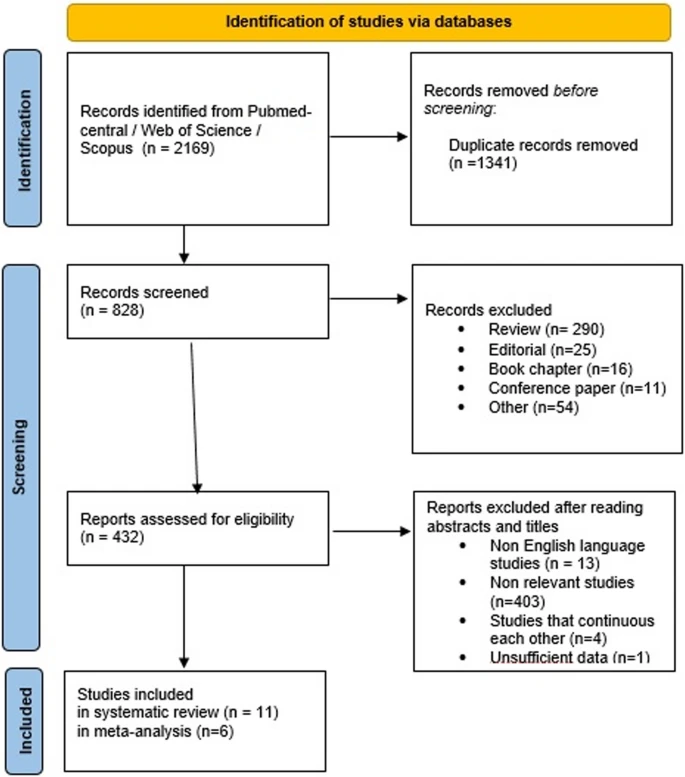
Figure 1: PRISMA flowchart - study selection for inclusion and exclusion criteria.
Six studies totaling 75 patients were included in the meta-analysis. Four of these were phase 1-2/open-label single-arm studies, one was a single-arm pilot study, and one was a randomized controlled single-blind study. The studies were published between 2016 and 2023. The characteristics of the included studies in the systematic review and meta-analysis are detailed in Table 1.
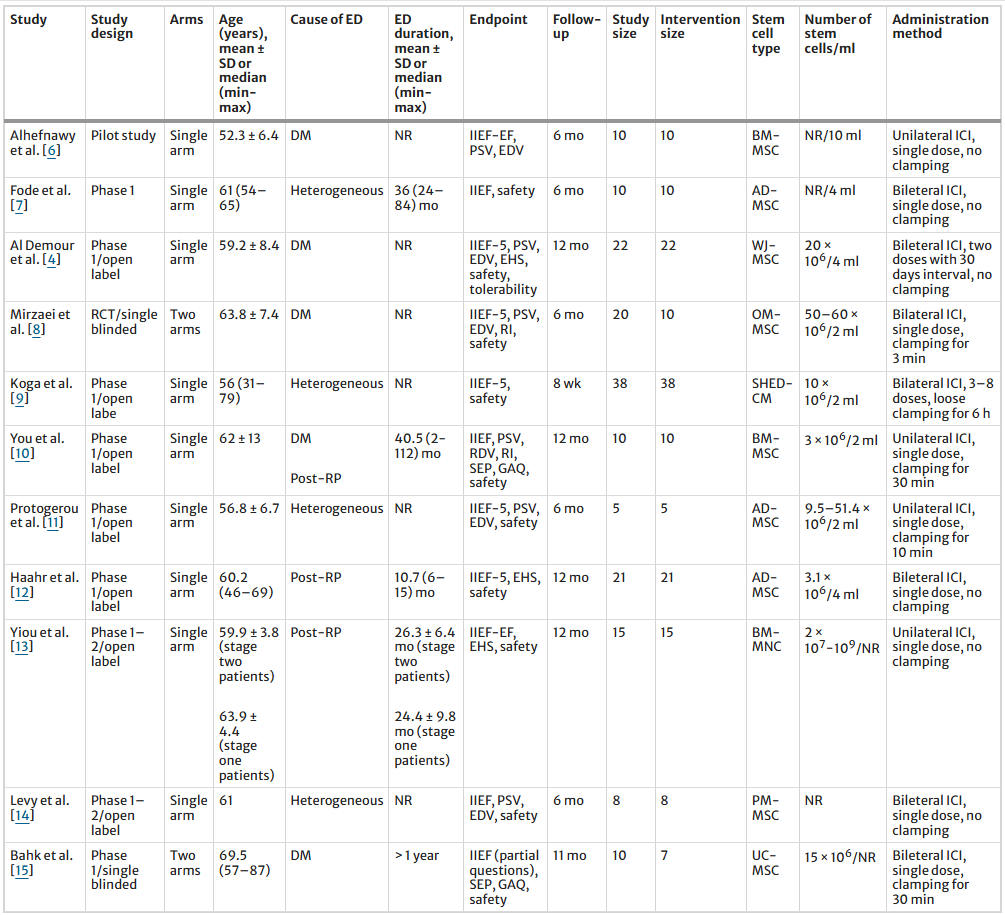
Table 1: Systematic evaluation of the characteristics of the included studies
Reporting changes in peak systolic velocity (PSV)
Comparison of PSV at baseline versus 3 months post-treatment:Three studies assessed PSV before and after 3 months of treatment and showed a combined effect size of 0.63, which is a moderate effect and statistically significant. No significant heterogeneity or publication bias was found between the studies, theSuggests stabilizing effect of stem cell therapy on PSV improvement in the short term(Figure 2A).
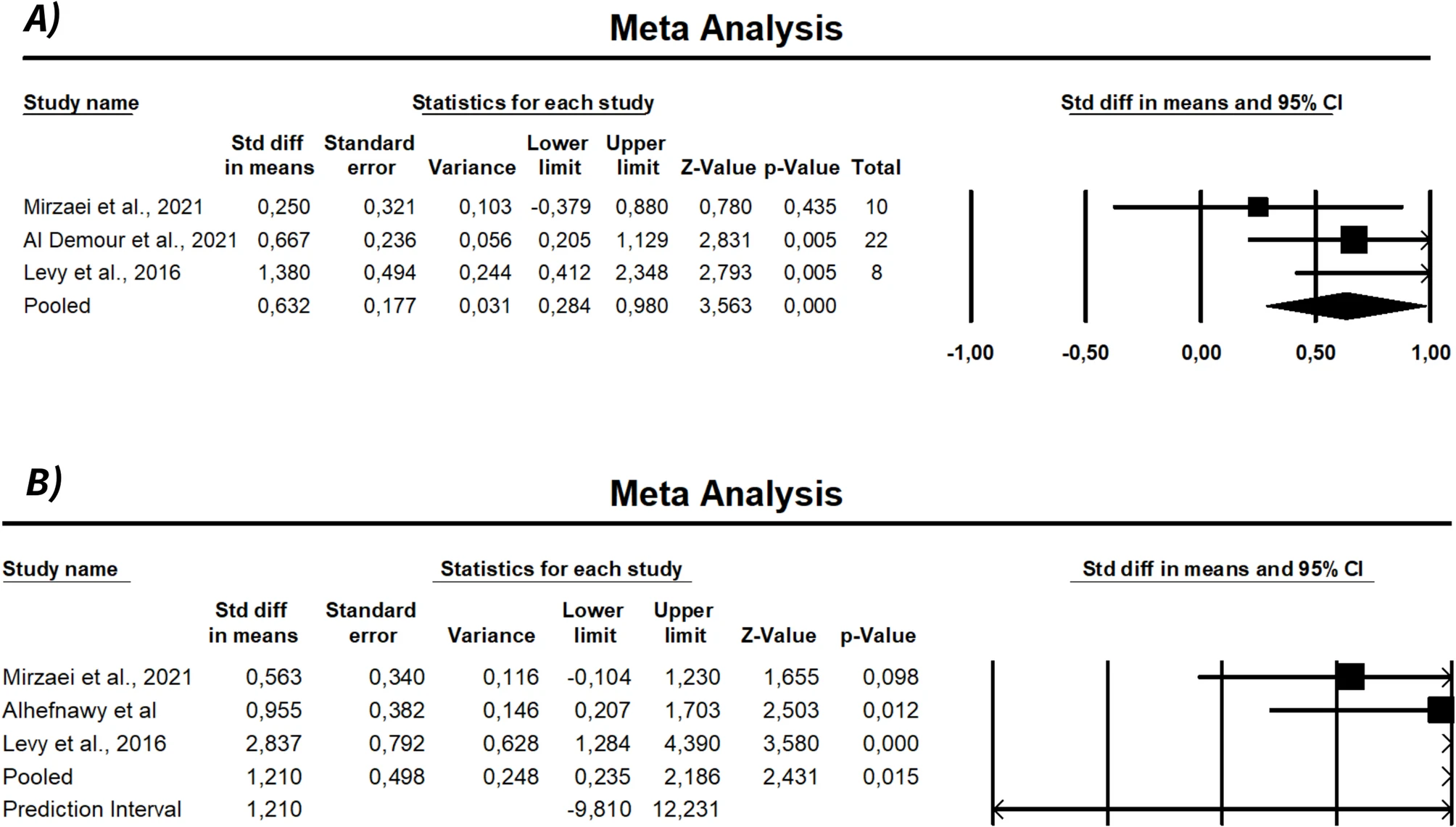
Figure 2
Comparison of PSV at baseline versus 6 months post-treatment:Three studies assessed PSV at 6 months after treatment, with a combined effect size of 1.2, which is a large effect and a statistically significant difference. However, there was moderate inter-study heterogeneity, suggesting some variation in results across studies, although no publication bias was found.Overall suggests that SCT also significantly improves PSV in the medium term(Figure 2B).
Changes in end-diastolic velocity (EDV)
Comparison of EDV at baseline versus 3 months post-treatment:Three studies assessed changes in EDV at 3 months, and the combined effect size was 0.36, a small and statistically significant effect. No significant heterogeneity or publication bias was seen between studies, theSuggests that SCT has some positive impact on EDV in the short term(Figure 3A).
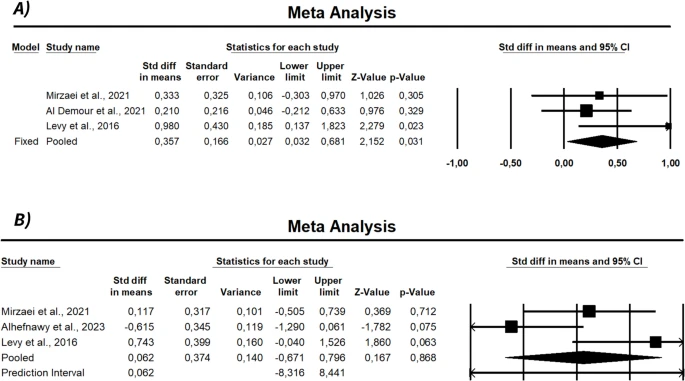
Figure 3
Comparison of EDV at baseline versus 6 months post-treatment:Three studies analyzed changes in EDV at 6 months, with a combined effect size of only 0.06, theThe results were not statistically significant, suggesting that SCT has limited long-term improvement in EDV.There was moderate heterogeneity between studies, but no publication bias was found (Figure 3B).
Changes in IIEF-5 scores
Comparison of IIEF-5 scores at baseline and 3 months after treatment:Two studies assessed IIEF-5 scores at 3 months with a combined effect size of 1.05, which is a large effect and statistically significant. Although moderate heterogeneity was detected, the difference was not significant. Due to the limited number of studies, publication bias analysis was not performed (Figure 4A).
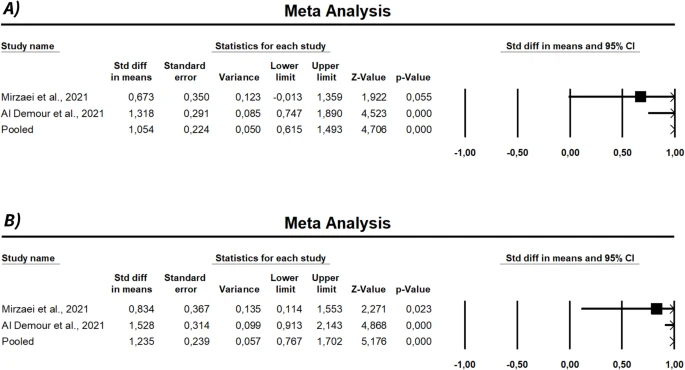
Figure 4
Comparison of IIEF-5 scores at baseline and 6 months after treatment:Two studies assessed IIEF-5 scores at 6 months, with a combined effect size of 1.23, suggesting a large effect and highly statistically significant results. Despite moderate heterogeneity, statistical tests did not reach the level of significance. Again, due to the small number of studies, no publication bias analysis was performed (Figure 4B).
Changes in IIEF scores
IIEF score (3 months):Two studies showed no significant difference in IIEF scores at 3 months post-treatment compared to baseline (SMD=-0.11, p=0.647).Suggests that SCT has not brought significant improvement in the short term, no significant heterogeneity was seen between studies (Figure 5A).
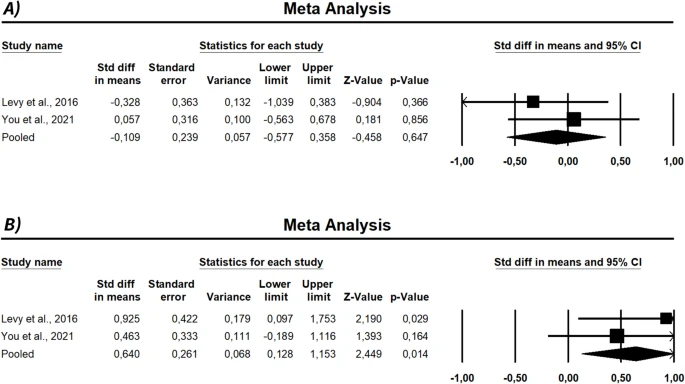
Figure 5
IIEF score (6 months):At 6 months, IIEF scores were significantly higher (SMD=0.64, p=0.014), a medium effect size thatSuggests that SCT can have a positive impact on erectile function at mid-term follow-up, and the results were in good agreement across studies (Figure 5B).
Changes in IIEF-EF scores
IIEF-EF score (6 months):Two studies further evaluated the IIEF-EF domain scores, theThe results showed a significant improvement after 6 months of treatment (SMD=1.57, p<0.0001), with a large effect size, suggesting that SCT is more significant in improving core domains of erectile function(Figure 6).
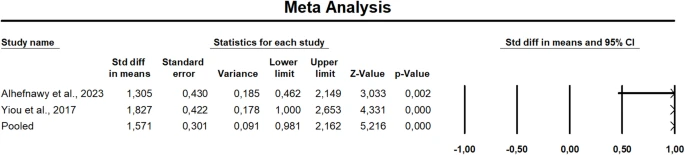
Figure 6
Changes in Erectile Hardness Score (EHS)
EHS (3 months):In terms of EHS metrics, both studies found significant improvement in EHS at 3 months post-treatment (SMD=1.33, p<0.0001), a large effect size, but with some heterogeneity, mentioning that theThe short-term efficacy is significant but the stability of the results is weak.(Figure 7A).
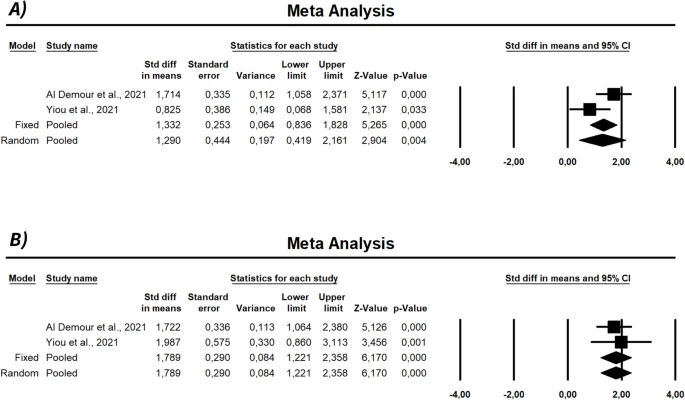
Figure 7
EHS (6 months):By 6 months, EHS improvement was more prominent (SMD=1.78, p<0.0001), a larger effect size, and there was no significant heterogeneity.Demonstrates stable and significant mid-term efficacy of SCT on erectile hardness(Figure 7B).
Qualitative synthesis of studies not included in the meta-analysis
In addition to the six studies included in the meta-analysis, five additional studies were included in the systematic review but were excluded from the quantitative analysis due to the inability to extract outcome data (e.g., median, lack of standard deviation), differences in dosing methods, or reporting of results that were inconsistent with the pooled results of the meta-analysis. Qualitative assessment of these studies revealed that the results were generally consistent with the meta-analysis, suggesting favorable efficacy after stem cell transplantation (SCT).
Specific findings include: a phase I trial of 21 post-prostatectomy ED patients by Haahr et al. found an improvement in IIEF-5 scores at 6 months and a slight decrease at 12 months, suggesting a transient benefit; Koga et al. reported a more pronounced improvement in younger patients with fewer comorbidities; Bahk et al. found an early onset of morning erections in patients with diabetic ED, but with limited long-term effects; Fode et al. confirmed safety and feasibility; Protogerou et al. found a trend toward improvement with SCT in combination with platelet-cleaving plasma.
Despite differences in methodology.These studies are generally consistent with the results of the meta-analysis, supporting the potential of SCT to improve parameters of erectile function, while also suggesting that efficacy may be time-limited in natureThe
Overall efficacy analysis
The clinical trials included in this meta-analysis assessed the effectiveness of SCT using the validated questionnaire IIEF score, EHS, and penile Doppler ultrasound parameters (PSV and EDV).
Based on the results of this meta-analysis, theStem cell transplantation techniques can be effective in treating ED because it can increase mean IIEF scores and mean PSV values.Improvement in IIEF-5 scores at 6 months shows a large effect size, suggesting a potential increase of 4-6 points-a clinically meaningful gain that can move patients from moderate to mild EDThe
Although EDV increased slightly at 3 months, indicating a temporary deterioration in veno-occlusive function, it increased again at 6 months, as there was no significant difference from baseline values. These results demonstrate the potential efficacy of SCT in the treatment of ED.
Mechanisms of stem cell therapy for erectile dysfunction
Preclinical studies have shown that stem cell therapy (SCT) exerts multiple regenerative mechanisms, including three major ones, primarily through paracrine signaling rather than long-term implantation of stem cells:
Vascular and nerve repair mechanisms:Stem cells promote neovascularization and endothelial cell repair through paracrine effects and enhance the expression of eNOS and nNOS, thereby improving perfusion and nerve function. This provides the basis for restoration of erectile response.
Cytoprotective and antifibrotic effects:SCT inhibits endothelial and smooth muscle cell apoptosis and prevents cavernous fibrosis, thereby maintaining the structural and functional integrity of the tissue. SCT is particularly important for etiologies that lead to cellular damage, such as diabetes.
Integrated restoration of smooth muscle with functional improvement:Studies have shown that SCT increases smooth muscle content and restores nNOS downregulation caused by diseases such as diabetes. Together, these combined effects enhance the hemodynamic and hardness response of the corpus cavernosum, mechanistically explaining the efficacy observed in clinical trials.
security assessment
Of the clinical trials discussed in this systematic evaluation, four studies reported no adverse reactions associated with SCT. The other 4 studies reported minor side effects such as mild discomfort at the injection site, irritation and mild pain, redness, swelling, local reactions and itching.
Research Limitations and Prospects for Clinical Applications
Although our study demonstrated significant improvement in erectile function after stem cell transplantation (SCT), the number of studies included in the meta-analysis was very limited, and the heterogeneity limits our ability to make conclusive interpretations of clinical significance. Stem cell transplantation for erectile dysfunction (ED) is not yet ready for widespread clinical use.
Most trials are at an early stage, with a lack of standardization in terms of cell type, dose and mode of administration. In addition, regulatory, ethical and cost considerations remain unresolved. Currently, stem cell transplantation (SCT) should only be offered in clinical trials.
reach a verdict
This meta-analysis suggests that intracorporeal transplantation of stem cells may improve questionnaire scores and PSV assessments in the short term compared with baseline. Larger, better-designed randomized controlled trials with longer follow-up periods are still needed to draw more definitive conclusions. However, our findings provide pooled evidence in support of short-term efficacy, highlighting the promise of this therapy and the lack of future research.
Reference: [1]:Senel, S., Sevinc, A.H., Gultekin, H. et al. Stem cell therapy for erectile dysfunction: promise or reality? - a systematic review and meta-analysis of clinical trials. BMC Urol 25, 222 (2025). https://doi.org/10.1186/s12894-025-01913-5
Disclaimer: This article is intended only to disseminate scientific knowledge and share industry perspectives, and does not constitute any clinical diagnostic advice! The information published by Hangi Stem Cells is not a substitute for the professional advice of a physician or pharmacist. If you have any questions about copyright or other issues, please feel free to contact me.
郑重声明:本文版权归原作者所有,转载文章仅为传播更多信息之目的,如作者信息标记有错误,请第一时间联系我们修改或删除,多谢。
Leave a Reply