


Neural stem cell transplantation vs. conventional therapy: what are the advantages and limitations of treating brain injury and stroke?
In today's ever-advancing medical science, in the face of serious neurological disorders such as brain injury and stroke, patients and their families are often caught in the dilemma of the limited effectiveness of traditional treatments, while at the same time, they are also interested in the emergingNeural Stem Cell TransplantationThere are great expectations. Just how does this new treatment compare totraditional therapyWhat are the breakthroughs? Has it matured? In this article, we will provide you with an objective analysis from a scientific point of view of the two in theStroke treatmentrespond in singingBrain injury rehabilitationStrengths and Limitations in.
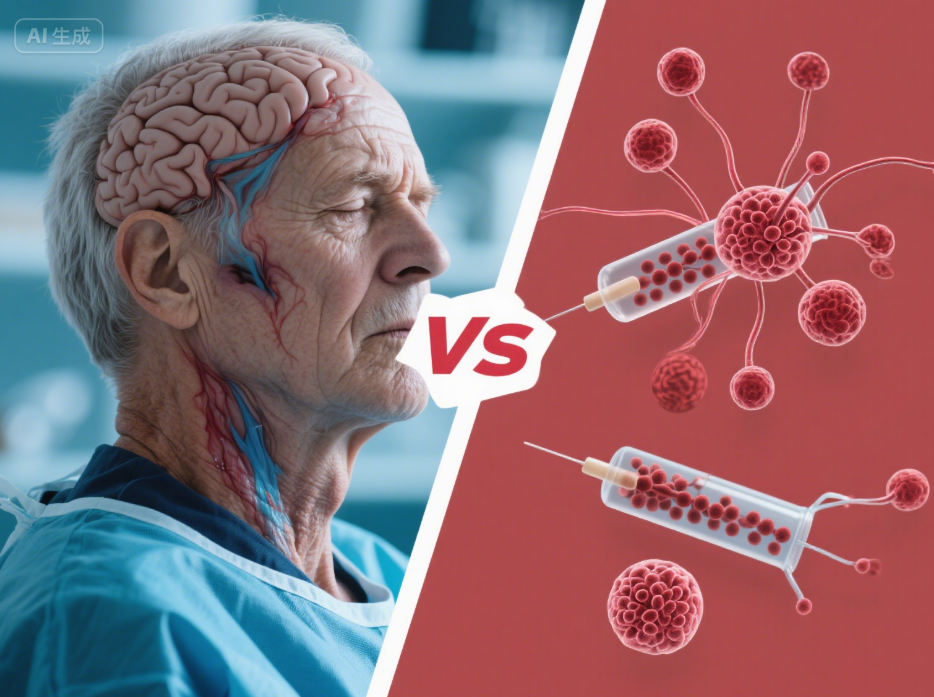
I. The dilemma of brain injury and stroke: traditional treatment modalities and their limitations
Brain injury (e.g., trauma, hypoxia) and stroke (cerebral infarction or cerebral hemorrhage) are the leading causes of disability in China. Their common consequences areMassive neuronal death in the brain., leading to severe sequelae such as hemiparesis, aphasia, and cognitive impairment.
Traditional treatments mainly include:
Acute phase treatment::suffer a paralyzing stroke: Thrombolysis, thrombectomy, medications to control blood pressure and intracranial pressure.brain injury: Dehydration to lower cranial pressure, surgical removal of hematoma, neurotrophic drugs.
- limitations: The time window for treatment is extremely short (e.g., the "golden 6 hours" for thrombolysis) and only saves dying cells, not "regenerates" dead neurons.
Recovery Rehabilitation: Physical therapy, occupational therapy, and speech training are the currentBrain injury rehabilitationThe cornerstone of the
- limitationsThe principle is to "promote brain remodeling", but the effect is slow and limited, and for severe injuries, often leaves permanent disabilities.
Long-term drug therapy: Use of medications that nourish nerves, improve cerebral circulation, or control complications.
- limitations: Most of them can only play a supporting role and cannot repair the damaged nerve structure at the root.
The central limitation of conventional therapies is that they cannot replace nerve cells that have been permanently lost. And that's exactly whatneural stem cell transplantationattempts to solve the problem.
II. What is neural stem cell transplantation? What is its mechanism of action?
Neural Stem Cells (NSCs) are a class of cells with "superpowers": they are able toself-renewal, and differentiate into a variety of nerve cells such as neurons, astrocytes, and oligodendrocytes.
neural stem cell transplantationAs the name suggests, ex vivo cultured, healthy neural stem cells are transplanted into the damaged area of the patient's brain by means of a precisely targeted injection or intravenous infusion.
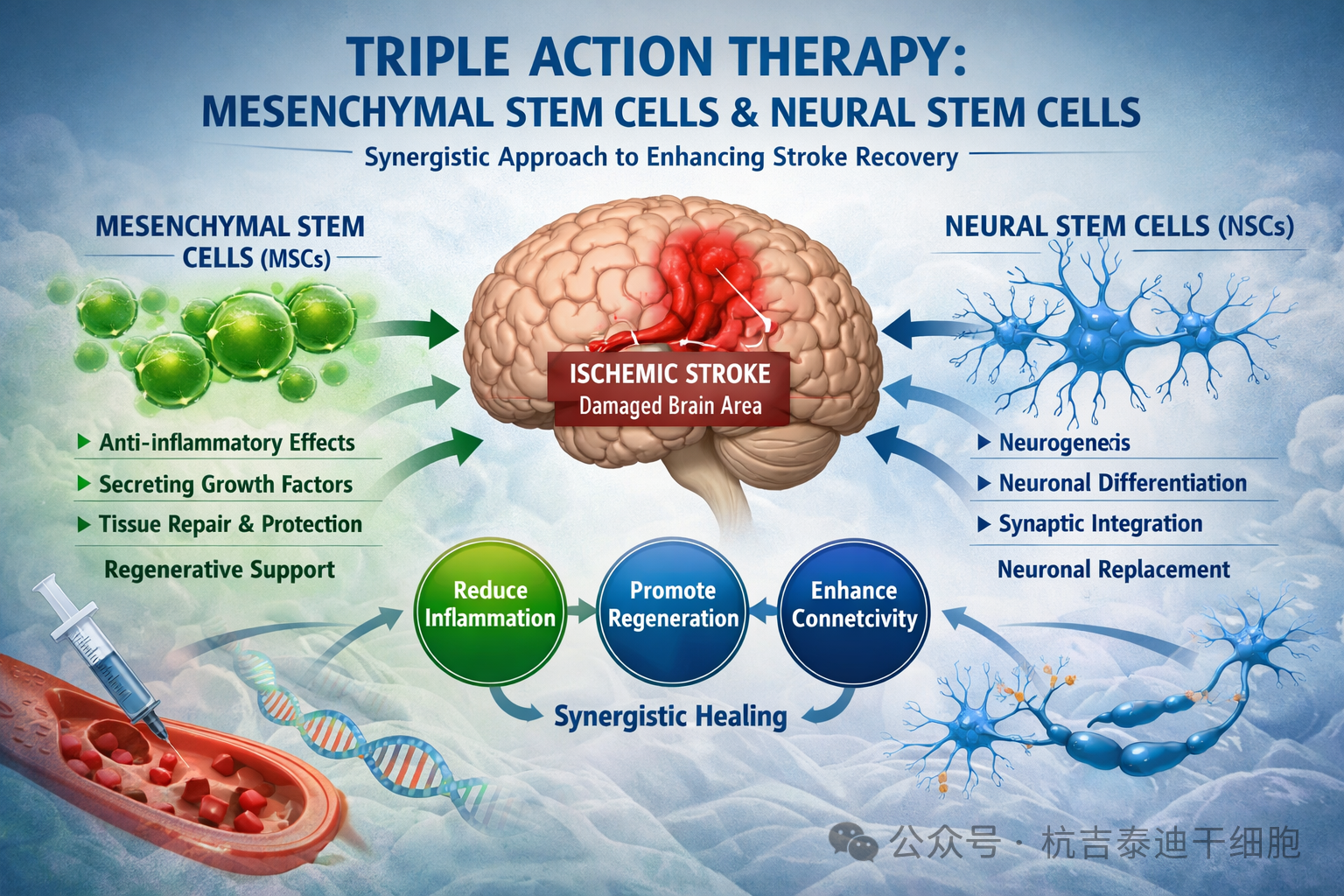
It works on three main mechanisms:
Cell replacement ("seeding"): Newly transplanted stem cells induced by local microenvironmentalDifferentiate into new neuronsInstead of replacing those cells that have died, it tries to "rewire" the neural circuits.
Nutrition and protection ("fertilizer" role): Stem cells secrete large amounts ofNeurotrophic factors (e.g. BDNF, GDNF)that acts like a fertilizer to protect the remaining neurons in the damaged area and enhance their survival.
Regulation of the microenvironment ("soil improvement" effect): they modulate the immune response and attenuate the area of injuryinflammation response, creating a friendlier environment for nerve repair.
III. Advances in neural stem cell transplantation research: hope from the laboratory to the bedside
GloballyStem Cell Clinical ResearchIt is accelerating and shows great potential.
International cases: In a famous study at Stanford University, researchers infused mesenchymal stem cells (which can be induced into nerve cells) intravenously into chronic stroke patients. It was found that the patients' arm and leg motor functions were significantly improved, with results far exceeding those of rehabilitation alone.
Domestic progress: A number of domestic through the national recordStem Cell Clinical Research Organization(e.g., Shanghai Tongji Hospital, Beijing Tiantan Hospital, etc.) are conducting related studies. For example.The study of "Human-derived neural stem cell transplantation for the treatment of spinal cord injury" approved by Tongji Hospital has initially observed positive signals of improvement in sensory and motor functions in some patients.
These studies have shown thatneural stem cell transplantationFor those who have passed through the acute phase and are in the post-acute phase, there is an unprecedented opportunity for "repair".
IV. Advantages vs. Risks: A Comprehensive Comparison of Neural Stem Cell Transplantation Technology and Traditional Therapies
| perspective | traditional therapy | neural stem cell transplantation |
|---|---|---|
| therapeutic target | Disease control, delayed progression, functional compensation | Repairing damaged structures and promoting nerve regeneration |
| mechanism of action | Passive protection, support, training substitution | Active substitution, nutrition, immunomodulation |
| Therapeutic potential | Effectiveness has a ceiling and severe disability is difficult to improve | Great potential, theoretically possible function reversal |
| timing of treatment | Clear effect in the acute phase, diminishing effect in the recovery phase | Greater focus on recovery and aftermath periods |
| Risks/limitations | Drug side effects, recovery plateau | Immune rejection, potential tumorigenicity, high cost, immature technology |
| maturity level | Proven technology, standardized solution | Still in clinical research phase, unconventional treatment |
Potential Risks:
immune rejection: Stem cells of allogeneic origin may be attacked by the body.
tumorigenic: Stem cells have a theoretical risk of forming tumors if they overpopulate or differentiate out of control in the body.
Uncertainty of efficacy: It is not effective in all patients, and the survival of transplanted cells and the efficiency of functional integration remain challenges.
V. Current Challenges to Neural Stem Cell Transplantation
Technical difficulties: How to ensure that transplanted stem cellsEfficient survival and precise differentiation into desired cell typesand establishing the correct functional connectivity with the host brain is the biggest scientific challenge.
Ethics and Regulation: The source and application of stem cells involve ethical issues. Our country has extremely strict regulation on this, and all clinical research must be conducted in organizations that have filed for approval.Strictly forbidden to be applied as a general medical technology for a feeThe
Cost and accessibility: It is currently mostly a free clinical research program. If they become available in the future, their high cost of cell preparation could lead to staggering treatment costs andDifficult to be covered by health insurance in the short termThe
Proof of efficacy: the need for larger-scale, longer-cycleRandomized double-blind clinical trialsto fully validate its safety and efficacy.
VI. Future prospects and rationalization
The future is full of promise. With the convergence of new technologies such as gene editing techniques (e.g., CRISPR) and 3D bioprinting, future stem cell therapies are likely to be more precise, safer, and more effective.
For patients and families, how should they rationalize?
Stay hopeful and believe in science::neural stem cell transplantationrepresents the future direction of medicine, a true regenerative medicine to look forward to.
Keep your feet on the ground and recognize the status quo: Currently itThe vast majority are still in clinical studiesIt should not be regarded as the "last straw" or a "panacea".
Selecting regular channels::Do not trust any hospital or intermediary that claims to be able to pay for stem cell treatment.The only formal way to do this is to participate in a formal state-approved tertiary hospital. The only formal way to do this is to participate in a regular tertiary hospital that is approved by the state.Stem Cell Clinical ResearchThe
Not giving up on traditional treatment: In the search for new treatments.Adherence to standardized rehabilitationremains the most effective and fundamental means of improving quality of life.
Conclusion: between science and hope
The development of science is always long and winding.neural stem cell transplantationLike a new ship sailing into uncharted waters, although the prospects are promising, it is inevitable to encounter wind and waves during the voyage. Andtraditional therapyOn the other hand, it's a proven and sturdy dock that provides solid security.
The best strategy is to face the disease:Based on the present, use the existing traditional therapies; looking to the future, pay close attention to and rationally look forward to the official breakthrough of stem cell research. Maintaining a scientific attitude, holding the bottom line of rationality, and choosing the most secure and appropriate treatment plan for patients under the professional guidance of doctors is where the real hope lies.
Disclaimer: This article is intended only to disseminate scientific knowledge and share industry perspectives, and does not constitute any clinical diagnostic advice! The information published by Hangi Stem Cells is not a substitute for the professional advice of a physician or pharmacist. If you have any questions about copyright or other issues, please feel free to contact me.
郑重声明:本文版权归原作者所有,转载文章仅为传播更多信息之目的,如作者信息标记有错误,请第一时间联系我们修改或删除,多谢。
Leave a Reply