


Journal of Neuroprosthetics: Progress in clinical studies of neural stem/progenitor cell transplantation for chronic spinal cord injury
Spinal cord injury (SCI) is a serious and disabling neurological condition that can lead to impaired mobility, sensory dysfunction and autonomic dysfunction. Neural stem/progenitor cell (NSPC) transplantation is considered a promising therapeutic strategy to promote functional recovery. Although most studies have focused on the early stages of SCI, the majority of patients in the clinical setting are in the chronic phase, and clinical trials targeting chronic SCI are more revealing of potential efficacy.
Background of the study
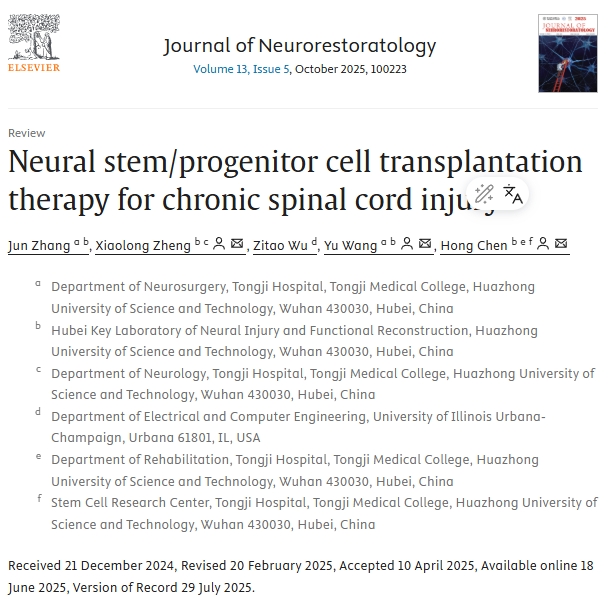
Recently, a multi-institutional team led by the Department of Neurosurgery at Tongji Hospital, Tongji Medical College, Huazhong University of Science and Technology, has published an article in the international journalJournal of Neuroprosthetics" published a review to systematically summarize the progress of NSPC transplantation from different sources for the treatment of chronic SCI [1]:
Rodent NSPC transplantationSurvives, differentiates and supports regeneration at the site of injury, but requires combined therapy to induce functional motor recovery;
Human NSPC transplantation(alone or in combination) showed significant therapeutic potential;
clinical trialWith safety and feasibility as primary endpoints, long-term follow-up data showed positive trends.
Rodent neural stem/progenitor cell transplantation has shown preliminary efficacy in treating chronic spinal cord injury
Research Background and Cell Differentiation Characterization: Using adult or embryonic rodent central nervous system (CNS)-derived neural stem/progenitor cells (NSPCs), researchers transplanted them into a model of chronic spinal cord injury to assess their survival, differentiation, integration capacity, and functional recovery effects. NSPCs from different sources showed significant differentiation differences:Adult spinal cord NSPCsIt mainly differentiates into oligodendrocytes and astrocytes;Embryonic stem cells (ESC) or fetal spinal cord-derived NSPCsthen has a stronger potential for neuronal differentiation; whereasFetal cerebral cortex NSPCsIn contrast, differentiation into astrocytes was predominant. This differentiation propensity suggests that cell source is a key determinant of post-transplant neural spectrum orientation.
Survival challenges and application limitations: It is worth noting thatNSPCs amplified by in vitro cultureAfter transplantation into the chronic dorsal column injury model, the survival rate was significantly lower than that of theFreshly isolated fetal CNS-NSPCs.. Although induced pluripotent stem cells (iPSCs) may serve as an alternative source of NSPCs, the application of rodent iPSC-derived NSPCs in the treatment of chronic spinal cord injury has not been fully explored, and the relevant efficacy data are still scarce. These findings suggest that optimizing the cell preparation process (e.g., reducing in vitro culture) may be crucial for enhancing graft survival, and the therapeutic potential of iPSC-NSPCs needs to be further validated.
Limitations on the efficacy of rodent brain-derived neural stem/progenitor cell transplantation alone in the treatment of chronic spinal cord injury (SCI)
Survival and integration conflicts and microenvironmental impacts: The lower initial survival of rodent adult brain-derived NSPCs in the chronic SCI model may be related to the formation of chronic-phaseAstroglial scarring and inhibitory factorsrelated to hindering cell migration integration. However, some studies have shown that such cells still possessPotential to form neuronal relaysThis is a controversial issue, suggesting that their ability to survive is controversial. This difference may be related to the definition of "chronic phase": the microenvironment is significantly different in the early phase after SCI (e.g., enrichment of chondroitin sulfate proteoglycan CSPGs around the injury zone) versus the late phase (e.g., confinement of CSPGs to the core of the scar after 3 months). RNA sequencing showed no effect of transplantation time point (subacute vs. chronic phase) on the transcriptome of fetal brain-derived NSPCs, suggesting that the primary cause of limited efficacy is theChronic injury microenvironment inhibits host-graft interaction, rather than the cell's own properties.
Fundamental limitations and optimization directions: The central limitation of rodent brain-derived NSPCs is theirInsufficient capacity for multidirectional differentiationup toregion-specific mismatch-- Brain-derived cells have difficulty adapting to the spinal cord microenvironment. In contrast, human studies have confirmed that directed differentiation of hESCs/hiPSCs intoSpinal NSPCs(rather than cerebral type) is more able to promote host neural circuit integration and corticospinal tract regeneration. This reveals the critical role of regional fitness of cellular origin for functional recovery. Therefore, transplantation of rodent NSPCs alone has limited efficacy and needs to be explored in futurejoint strategy(e.g., anti-scarring therapy or neurotrophic support) to break through microenvironmental limitations, while prioritizing the development of transplantation protocols for spinal cord-specific NSPCs.
Neuroprotective and differentiation factors
To optimize the SCI environment, researchers have used a variety of neuroprotective and differentiation factors as adjunctive therapies, exerting effects that promote cell survival, differentiation, axonal growth, synapse and myelin formation, and modulation of inflammation. Most of the studies were conducted in the subacute SCI phase, and their applicability in chronic SCI remains to be explored. Among them, the role of neurotrophic factor 3 (NT-3) has been studied in chronic SCI. Modified human NT-3 (NT-3/D15A) binds and activates TrkB and TrkC receptors, promoting cell survival, proliferation and axonal myelination through neurotrophic signaling.
A study demonstrated that transplantation of NSPCs expressing mutant NT-3/D15A enhanced myelin formation and facilitated partial hindlimb functional recovery in the chronic phase. However, cell survival in this experiment remained low and failed to populate the injured area. The remyelinating function of transplanted cell sources still needs to be further verified by electrophysiology. In addition, this study only used the BBB score as an index of motor function, which failed to fully reflect the improvement of motor function.
Rehabilitation methods
In addition to combined biochemical interventionsRehabilitation drives plasticity in preserved neural circuits and promotes axonal sprouting, thereby restoring function.. NSPC transplantation combined with running table training further promoted neuronal differentiation, improved spinal cord conductivity, central pattern generator activity and nutritional support, and significantly facilitated motor recovery.
Similar efficacy was obtained with forelimb functional training in a cervical cord SCI model. Combined rehabilitation and transplantation 1 month after severe bilateral cervical spine contusions significantly restored forelimb grasping function and enhanced regeneration of host corticospinal axons in the injury zone. In addition to improving motor function, cell transplantation therapy improved sensory dysfunction in individuals with chronic SCI. Similarly, running table training combined with NSPC transplantation attenuated nociception-related behavioral manifestations such as thermal abnormal pain and gross touch-pressure nociceptive hypersensitivity significantly, but had no significant effect on fine touch-pressure nociceptive hypersensitivity.
In summary, the study shows thatRodent NSPC transplantation combined with ChABC to improve the microenvironment, neurotrophic factors, and rehabilitation promotes motor function recovery in chronic SCI, whereas transplantation of rodent NSPCs alone does not significantly improve motor function. However, it is noteworthy that even transplantation of rodent NSPCs only induced and supported regeneration at the histologic level in areas of chronic SCI injury. The results of the relevant experimental studies are summarized in Table 1.
Table 1 . Experimental studies of rodent neural stem/progenitor cell (NSPC) transplantation for chronic spinal cord injury (SCI).
| consultation | caption | Cell Source | mould | Cell transplantation time | graft site | combination therapy | Observation Period | behavioral testing | Main results |
|---|---|---|---|---|---|---|---|---|---|
| Rodent adult central nervous system-derived NSPCs | |||||||||
| Karimi-Abdolrezaee et al. 2006 26 | Delayed transplantation of adult neural precursor cells promotes myelin regeneration and neurological recovery after spinal cord injury | Adult brain-derived NPC in mice | Rat, T7 clamp compression | 8 weeks post-infection (chronic phase) 2 weeks post-infection (subacute phase) |
2 mm anterior and 2 mm caudal to the site of bilateral injury | Minocycline treatment. GFs: PDGF-AA, bFGF, EGF |
6-8wpt | BBB Grid Walk Footprint analysis |
Low cell survival in chronic spinal cord injury |
| Pfeifer et al. 2006 27 | Autologous adult rodent neural progenitor cell transplantation as a viable strategy to promote structural repair of the chronically injured spinal cord | Autologous rat adult brain-derived NPC | Rat, C3 dorsal corticospinal tract transection | 8 weeks/year | damage center (math.) | fibroblast | 4wpt | there isn't any | Promotes graft survival, tissue replacement and axonal regeneration |
| Karimi-Abdolrezaee et al. 2010 38 | Synergistic effects of transplanted adult neural stem/progenitor cells, chondroitinase, and growth factors promote functional repair and plasticity in chronically injured spinal cord | NPC of preadult brain origin in mice | Rat, T7 clamp compression | 7 weeks | 2 mm anterior and 2 mm caudal to the site of bilateral injury | ChABC GF: PDGF-AA, bFGF and EGF |
9wpt | BBB Grid walk analysis von Frey thermal hyperalgesia |
Promoting axonal integrity and plasticity in corticospinal tracts and enhancing plasticity of the downstream serotonin pathway |
| Rodent embryonic central nervous system-derived neural stem cells | |||||||||
| Nishimura et al. 2013 14 | Effects of time-dependent changes in the microenvironment of the injured spinal cordNeural stem cell transplantation for spinal cord injurypotential | NSPC of striatal origin in E14 mice | Mouse, T10 contusion | 9 dpi (subacute period) 7 wpi (chronic phase) |
lesion center | there isn't any | 6wpt | BMS Rotarod Test gait analysis |
There were no significant differences in the survival and differentiation phenotypes of transplanted cells with gene code expression. |
| Kumamaru et al. 2013 28 | Therapeutic activity of transplanted neural stem/precursor cells is not dormant in the chronically injured spinal cord | NSPC of striatal origin in E14 mice | Mouse, T10 moderate contusion | 12 weeks/year | 1 mm anterior and 1 mm caudal to the site of bilateral injury | there isn't any | 6 wpt (RNA sequencing: 1 wpt) | BMS, Grid step test, Footprint analysis |
Transplanted NSPC differentiate into neurons/oligodendrocytes and produce therapeutic molecules but do not improve motor function |
| Dagci et al. 2009 34 | Changes in expression of depurine/dehydropyrimidine endonuclease-1/oxidized reductase-1 (APE/ref-1) and DNA damage in the tail of rats with acute and chronic spinal cord injury treated with embryonic neural stem cells | E13.5 NSC of rat spinal cord origin | Rat, T8/9 Selective ablation of lateral white matter tracts and very small portions of dorsal and ventral gray matter | 4 weeks post-infection (chronic phase) 1 week post-infection (acute phase) |
damage center (math.) | there isn't any | 4wpt | blood-brain barrier | Reduced levels of DNA damage |
| Hayakawa et al. 2022 35 | Transplantation of neural progenitor cells into a chronic dorsal column injury model | E13.5 NPC of rat spinal cord origin | Rat, C4 complete unilateral dorsal column injury | 4 weeks pi; 6 weeks pi; 12 weeks pi | damage center (math.) | there isn't any | 3 or 5 wpt | there isn't any | NPC survives and differentiates into neurons, promotes host sensory axon regeneration, and modifies glial/fibrotic scars |
The process of human neural stem/progenitor cell transplantation for the treatment of spinal cord injury
Although transplantation of rodent NSPCs has shown promising and beneficial results in animal models of chronic SCI, these cells cannot be used directly for the treatment of human SCI due to xenotransplantation.Therefore, it is of great relevance to study the efficacy of human NSPCs (hNSPCs) in chronic SCI models. Previously, the main source of hNSPCs was aborted fetuses. Due to the ethical problems associated with obtaining hESCs, the emergence of hiPSCs allows the generation of any specific type of cell and makes possible autotransplantation without immune rejection.
Limitations of efficacy and clinical challenges of the HuCNS-SC cell line
Human fetal brain-derived neural stem cells (HuCNS-SC) are categorized into research cell lines (RCL) and clinical cell lines. Inchronic thoracic medullary injury (CMI)In the rodent model, HuCNS-SC RCL survived differentiation after transplantation, formed mainly oligodendrocytes and neurons, and improved motor coordination, but theLack of critical histologic evidence(e.g., injury volume reduction, axonal regeneration, or synapse formation) and did not reduce glial scarring.
Much of their research relies onImmunodeficiency animal models, clinical generalizability is questionable. More notably, incervical cord injuryThe efficacy of RCL is significantly limited in the middle: it is only effective in the subacute phase, and the clinical cell lines are completely ineffective in the chronic phase, highlighting itsDual limitations of time window and site of injury. Future optimization strategies for delayed chronic phase need to be developed to enhance clinical value.
Therapeutic turn of hiPSC-derived neural precursor cells
In a model of chronic cervical cord injuryCaudal lateralized hiPSC-derived neural precursor cells (NPCs) could differentiate into neurons and glial cells but failed to significantly restore function - which may be related to theStronger downstream inputs needed for hand function recoveryThe characteristics of the correlation. In terms of safety, no tumor growth or pain abnormalities were seen after transplantation, but the efficacy is controversial:Limited effect of in situ transplantation to the core of the injuryIn the case of the spinal cord, the distal injection improves but tends to compress the normal spinal cord.
As a result, the focus of research has shifted from transplantation alone tocombination therapy: Combination of pro-differentiation small molecule drugs, rehabilitation training/electrical stimulation, or microenvironmental modification materials. Notably, current combined strategiesPreference for hiPSC-NPCs, highlighting its unique potential for future clinical translation.
Importantly, the recent finding that transplantation of hiPSC-derived neuroepithelial-like stem cells alone in a chronic SCI model reverses spinal cord cavitation and improves the inflammatory milieu may indicate greater therapeutic potential for hNSPC from a different source, albeit transplanted alone during the chronic phase of SCI. The characteristics of the included preclinical studies on hNSPC transplantation in chronic SCI are shown in Table 2.
Table 2 . Preclinical studies of human NSPC transplantation for chronic SCI.
| Author, year | caption | Cell Source | mould | Cell transplantation time | graft site | combination therapy | Observation Period | behavioral testing | Main results |
|---|---|---|---|---|---|---|---|---|---|
| Neural stem cells of human fetal brain origin | |||||||||
| Cheng et al. 201713 | post-spinal cord injuryneural stem cell transplantationDoes the timing of the animal model affect the outcome of the | Neural stem cells of human fetal brain origin | Rat, moderate contusion | 1 week post-infection (subacute phase) 4 weeks post-infection (chronic phase) 0 weeks post-infection (acute phase) |
Located distal to the site of the lesion | there isn't any | 6wpt | blood-brain barrier | Functional improvement was seen in all three time groups, but subacute transplantation was most effective |
| Salazar et al. 201019 | Human neural stem cells differentiate and promote motor recovery in a NOD-scid mouse model of early chronic spinal cord injury | Neural stem cells of human fetal brain origin | Mouse, T10 contusion | 30dpi | Anterior and caudal part of the damage center | there isn't any | 16wpt | BMS CatWalk Gait Analysis Von Frey |
Improved exercise recovery |
| Anderson et al. 201753 | Preclinical efficacy failure of human central nervous system stem cells for cervical spinal cord injury pathway studies | CCL or RCL for HuCNS-SCs | Mouse, C5 unilateral contusion | 60 dpi (chronic phase) 9 dpi (subacute period) |
Two rostral injections and two caudal injections 0.75 mm from midline | there isn't any | 12wpt | Cylindrical Tasks Front Paw Grip Ladder Beam Catwalk Analysis Von Frey experiments Hargreaves Trial |
The RCL of HuCNS-SC was effective when transplanted at 9 dpi but not at 60 dpi, whereas the CCL of HuCNS-SC was not effective in the cervical SCI model |
| Piltti et al. 201356 | Safety of human neural stem cell transplantation for chronic spinal cord injury | Neural stem cells of human fetal brain origin | Rat, T10 moderate contusion | 60 dpi (chronic phase) 9 dpi (subacute period) |
Two bilateral rostral injections at T7/T8 and two additional caudal injections at T10/T11 | there isn't any | 14wpt | BBB von Frey Hargreaves CatWalk Gait Analysis |
The timing of the graft does not cause abnormal pain or changes in nociceptive sensitization indices, supporting the safety of hCNS-SCns transplantation in chronic SCI. |
| Nekanti et al. 202462 | Multi-channel bridges and NSC synergize to enhance axonal regeneration, myelin formation, synaptic reattachment and recovery after SCI | Neural stem cells of human fetal brain origin | Mouse, C5 hemisection | 4 weeks PI | Preserved spinal cord parenchyma: two anterior to lesion, two caudal to lesion | PLG holder (implanted 0 dpi) | 16 wpt (tracking 26 wpt) | Horizontal ladder beam catwalk gait analysis | Enhanced axonal regeneration, myelin sheath formation, synaptic reconnection and motor recovery after spinal cord injury |
| hESC-derived NPCs | |||||||||
| Jones et al. 202151 | Human Embryonic Stem Cell-Derived Neural Crest Cells Promote Germination and Motor Recovery after Spinal Cord Injury in Adult Rats | Human Embryonic Stem Cells - Neural Progenitor Cells | Rat, C3/4 lateral cord and adjacent gray matter transected | 7 weeks | 1 mm from the anterior and caudal ends of the lesions | there isn't any | 16wpt | Vertical Cylinder Test | Promoting remodeling of downstream suture spinal cord projections and forelimb motor recovery |
| hiPSC-derived NSPC | |||||||||
| Nutt et al. 201354 | Tailed Human iPSC-Derived Neural Progenitor Cells Generate Neurons and Glial Cells but Fail to Restore Function in Early Chronic Spinal Cord Injury Models | hiPSC-NSC | Rat, C4 unilateral contusion | 4 weeks PI | One at the anterior end of the injured area and one at the caudal end of the injured area | there isn't any | 8wpt | Asymmetry test for limb use forelimb reaching task Von Frey |
Differentiated into neurons and glial cells, but failed to regain function |
| Cheng et al. 201657 | Local versus distal transplantation of human neural stem cells after chronic spinal cord injury | hiPSC-NSC | Rat, T10 moderate contusion | 4 weeks PI | Site of lesion localized and distal | there isn't any | 2wpt | blood-brain barrier | Only distal injections achieved statistically significant functional improvement |
| Martin Lopez et al. 202158 | Establishment of a chronic cervical spinal cord injury model in aged rats for cell therapy research | hiPSC-NPC | Aged rats (20 months old), C4 hemispheric contusion | 4 weeks PI | Anterior and caudal ends of the contusion site | there isn't any | 4wpt | Front Limb Stretching Tasks BBB Limb Use Asymmetry Test |
The injected cells survived and did not cause tumors. No improvement in motor function |
| Okubo et al. 201859 | Treatment with a gamma-secretase inhibitor promotes functional recovery in chronic spinal cord injury treated with human iPSC-derived transplantation | hiPSC-NSPC | Mouse, T10 moderate contusion | 6 weeks PI | damage center (math.) | Gamma-secretase inhibitors | 12wpt | BMS Rotarod Test gait analysis |
Promotes axonal regeneration, Myelin regeneration, inhibition of synapse formation with host neural circuits, and reticulospinal tract fiber formation contribute to motor function recovery |
| Ruzicka et al. 201960 | Effect of inoculation of iPS-derived neural progenitor cells on laminin-coated pHEMA-MOETACl hydrogels with double porosity on a rat model of chronic spinal cord injury | hiPSC-NPC | Rat, T8-9 balloon compression | 5 weeks PI | damage center (math.) | Laminin-coated pHEMA-MOETACl hydrogels | 23wpt | BBB Plantar Test |
Reduced cavitation and supported cell survival, but motor recovery was not significantly improved. |
| Hashimoto et al. 202361 | Microenvironmental modulation synergized with human stem cell transplantation promotes functional recovery after chronic complete spinal cord injury | hiPSC-NSPC | Nude mice, T10 completely transected | 7 weeks | lesion gap | Hepatocyte growth factor-releasing peptide Pelnac G plus | 6wpt | BBB urinary dysfunction recovery | improvement of motor and urinary function; microenvironmental modulation, including inhibition of inflammation, reduction of scar formation and enhancement of vascularization, the |
| Wertheim et al. 202263 | Regeneration of damaged spinal cord in chronic phase using engineered iPSC-derived 3D neuronal networks | iPSC-derived 3D spinal motor neuron networks | Mouse, T10 left hemisection | 6 weeks PI | focal cavity | Surgical Scar Removal Extracellular matrix hydrogel |
8wpt | Walking Gait Analysis lattice gait |
Microenvironments based on 3D dynamic biomaterials provide different biochemical cues for different stages of embryonic development and facilitate the assembly of functional spinal cord implants, thus facilitating functional sensorimotor recovery after implantation in chronic SCI patients |
| Patil et al. 202364 | Electrical stimulation affects the differentiation of transplanted region-specific human spinal cord neural progenitor cells (sNPC) after chronic spinal cord injury | hiPSC-Spinal NPC | Rat, T8/9 moderate contusion | 8 weeks/year | 3 separate sites: rostral, caudal and lesion sites | Caudal Nerve Electrical Stimulation Scar Ablation | 16wpt | BBB, Von Frey test |
Combination therapy promoted NPC differentiation and integration, myelin regeneration, and increased serotonergic neuron expression. |
| Shibata et al. 202365 | Rehabilitation training enhances the efficacy of human iPSC-derived neural stem/progenitor cell transplantation for chronic spinal cord injury | hiPSC-NSPC | Mouse, T10 contusion | 7 weeks | 2 points each on the cephalic and caudal sides of the injured epicenter | treadmill training | 8wpt | BMS, weight-turned-bar test, and quadrupedal gait analysis, Kinematic analysis |
Combined treatment significantly improved motor function. |
| Yoshida T et al. 202466 | Chronic spinal cord injury regeneration and neural stem/progenitor cell transplantation, rehabilitation and signaling protein 3A inhibitor combination therapy | hiPSC-NSPC | Nude mouse, T10 contusion | 7 weeks | 1 mm anterior and caudal to the center of the lesion | Signal protein 3A inhibitor, treadmill training | 8wpt | BBB MEP weights |
Significant increase in BBB score due to improved host-derived neuronal and oligodendrocyte differentiation and promotion of axonal regeneration |
| Kim JW et al. 202467 | Stepwise combined cell transplantation of mesenchymal stem cell and induced pluripotent stem cell-derived motor neuron progenitor cells in spinal cord injury | iMNP and hMSC | Rat, T9 moderate contusion | hMSCs (24 hours and 1 week post implant); iMNP (6 weeks post implant) | lesion site | Stepwise Combined Cell Transplantation | 6 watts | blood-brain barrier | Stepwise Cell Therapy Enhances MN Differentiation and Axonal Regeneration and Improves Behavioral Recovery |
| Kim JW et al. 202468 |
Combination of induced pluripotent stem cell-derived motor neuron progenitor cells and irradiated brain-derived neurotrophic factor overexpressing engineered mesenchymal stem cells enhances recovery of axonal regeneration in a rat model of chronic spinal cord injury | hiPSC-NPC | Rat, T9 moderate contusion | 6 weeks PI | lesion site | BDNF-eMSC co-transplantation with iMNP | 6wpt | blood-brain barrier | Combined cell transplantation improved behavioral recovery and enhanced differentiation and axonal regeneration of mature motor neurons.BDNF-eMSC promotes neuronal regeneration through BDNF expression. |
| Xu et al. 202169 | Human neural precursor cell transplantation reverses cavity growth in a rat model of post-traumatic spinal cord cavernous disease | hiPSC-NESC and human fetal spinal cord-derived NPC | Rat, spinal cord cavernous disease after T10/11 mild contusion | 10 weeks/year | cyst (med.) | there isn't any | 10wpt | BBB Carolinska School of Medicine Swimming Assessment Tool Balance Beam Walking Test Grid Walk Test |
Retrograde growth of spinal chord tubes |
| Xu et al. 202270 | Multiple therapeutic effects of induced pluripotent stem cell-derived human neural stem cells in a rat model of post-traumatic spinal cord cavernous disease | Human GMP-compliant iPSC-derived NESCs | Rat, spinal cord cavernous disease after T10/11 mild contusion | 10 weeks post-infection (chronic phase) 1 week post-infection (subacute phase) |
Parenchyma at the site of the lesion (1 week) or within the cyst (10 weeks) | there isn't any | 10wpt | there isn't any | Transplanted NESC inhibits cyst formation and expansion, the Regulation of astrocytes and activated microglia/macrophages to promote axonal regeneration |
Clinical trial of neural stem cell transplantation for chronic spinal cord injury
While there are still many concerns aboutcell therapyThe practical and biological issues have yet to be rigorously addressed, but cell therapies based on previous animal experiments have evolved in clinical practice in recent decades. Chervon cells, macrophages, olfactory sheath cells, and various types of stem cells, including NSC and MSC, have been studied. However, reproducible evidence of clinical efficacy has not been obtained from clinical trials of these therapies in patients. Nevertheless.
NSPC-based therapies are seen as a new window of opportunity, and related clinical trials have demonstrated the feasibility and long-term safety of transplanting cells into damaged spinal cords.Our search strategy identified six published studies on NSPC intramedullary transplantation and three ongoing clinical trials registered on clinicaltrials.gov.
NSPC of human fetal brain or spinal cord origin
The NSCs transplanted in clinical trials were mainly human fetal brain-derived NSCs (HuCNS-SC®, Stemcells, Inc., Newark, CA, USA) and human fetal spinal cord-derived NSCs (NSI-566 cells, Neuralstem Inc., Maryland, USA).
A Korean clinical trial of human fetal brain-derived NSPC transplantation for chronic SCI, reported in 2015, enrolled 19 patients with traumatic cervical SCI as an experimental group, including 17 cases with complete sensory-motor deficits and 2 cases with complete but incomplete sensory deficits, and 15 cases in the control group who did not receive cell transplantation.One-year follow-up revealed improvement in American Spinal Cord Injury Association Impairment Scale (AIS) grading in 5 of 19 transplanted patients, including 2 (A→C), 1 (A→B), and 2 (B→D), as well as other benefits, such as improvement in motor scores and electrophysiologic examination responses, demonstrating the safety and efficacy of NSPC transplantation in the treatment of chronic SCI. The study was limited by the small number of patients and the short follow-up period.
As stem cell culture technology continues to evolve, several NSC products for use in clinical trials have emerged.The safety of HuCNS-SC® has been demonstrated in several completed clinical trials for other disorders, including neuronal wax-like lipofuscinosis, Pelizajs-Metzbach disease and amyotrophic lateral sclerosis. The manual intramedullary injection technique for cell transplantation has been tested in patients to further elucidate the body's expansion of cell dose and volume.
The first-ever multicenter Phase I/IIa trial surgically transplanted HuCNS-SC® into the thoracic spinal cord of 12 subjects with AISA level or B and collected 6 years of follow-up data, including safety assessments, sensory threshold measurements, and neuroimaging data.This study revealed the safety and feasibility of short- and long-term surgery, with initial efficacy measures identifying partial segmental sensory improvement but no motor function-related scoresThe
Based on the safety profile of patients with thoracic spinal cord injury identified in this study, a phase II incremental dose safety and efficacy study of theAt least 9 months of follow-up data demonstrating the safety and feasibility of the HuCNS-SC® graft for chronic cervical spinal cord injury, with a trend toward improvement in overall mean functional outcome measuresThe
However, follow-up data were limited due to early termination of the study by the sponsor. The number of subjects followed for 12 months was too small to draw further conclusions about clinical efficacy.
In one of the first clinical trials using human spinal cord-derived neural stem cells (NSPC), four patients with T2-T12 spinal cord injuries received six bilateral midline stereotactic injections of NSI-566 cells. Follow-up data at 18-27 months post-transplantation showed that theNo serious adverse events were observed in all subjects, and only two subjects showed partial neurological improvement. However, the number of patients included in this study was small and the biggest limitation was the lack of a control group.
Ongoing Clinical Trial of hNSPC Transplantation for Chronic SCI
Currently, there are three ongoing clinical trials of hNSPC transplantation in patients with chronic SCI that are registered on ClinicalTrials.gov.
Phase I clinical trial NCT01772810 was initiated in August 2014, in which transplanted human spinal cord-derived NSCs were used to treat chronic AIS Grade A SCI. Phase I clinical trial NCT04205019 was initiated on November 14, 2020, and is designed to evaluate the intrathecal application of neural cells for the treatment of chronic traumatic complete (AISA Grade) or incomplete (AIS Grade B/C) SCI safety.
Phase II clinical trial NCT02688049 began in January 2016 with transplantation of NSCs with NeuroRegen stents after local scar removal and comprehensive postoperative rehabilitation, psychological, and nutritional measures.Characteristics of the included clinical trials of transplantation of NSPCs for chronic SCI are shown in Table 3.
Table 3: Clinical trials of human NSPC transplantation for chronic SCI.
| Author, year, country | Title PMID NCT |
participant | Cell Source | injured part | Research and design phase | graft site | combination therapy | Duration of follow-up visits | Main outcome indicators |
|---|---|---|---|---|---|---|---|---|---|
| Neural stem cells of human fetal brain origin | |||||||||
| Shin, J. et al. 2015, Korea73 |
PMID 26568892 , KCT0000879 Clinical trial of human fetal brain-derived neural stem/progenitor cell transplantation in patients with traumatic cervical spinal cord injury |
ep = 34 tp = 34 cp = 15 ip = 19 |
NSPC of human fetal brain origin | C3-C8 | Single-center, open-label, non-randomized controlled Phase I/IIa |
5 mm anterior and caudal to the center of the lesion | there isn't any | 1 year | Safety: no evidence of spinal cord injury, cavity or tumor formation, deterioration of neurologic function, and increased neuropathic pain or spasticity. Efficacy: Of the 19 transplanted patients, 5 improved in AIS grading: 2 (A→C), 1 (A→B), and 2 (B→D), and 1 improved in AIS grading in the control group (A→B). |
| Levi, A. et al. 2018, United States77 |
pmid 28541431; nct01321333; nct 02163876 Safety of intramedullary transplantation of human neural stem cells in chronic cervicothoracic spinal cord injury |
ep = 43 tp = 41 cp = 12 ip = 29 |
Human Fetal Brain-derived Neural Stem Cells (HuCNS-SC®) | C5-C7 T2-T12 |
Multicenter, single-blind, controlled Phase I/II clinical trial | spinal cord injury | there isn't any | 1 year | SAFETY: There are no safety concerns associated with cellular or manual intramedullary injections. |
| Curt, A. et al. 2020, Switzerland and Canada78 | pmid 32698674; nct 01217008 Damaged spinal cord a suitable target for stem cell transplantation |
ep = 12 tp = 12 cp = 0 ip = 12 |
Human Fetal Brain-derived Neural Stem Cells (HuCNS-SC®) | T2-T11 | Multicenter, open-label, controlled phase II | Above and below the site of injury | there isn't any | 6 years | SAFETY: Surgery-related adverse effects: cerebrospinal fluid leakage, pseudomeningeal bulge, etc. No clinical functional impairment, no tumors found. Efficacy: Segmental sensory improvement was obtained in 5 of 12 patients. |
| Levi, A. et al. 2019, United States79 |
pmid 30180779; nct 02163876 Clinical results of a multicenter study of human neural stem cell transplantation in chronic cervical spinal cord injury |
ep = 31 tp = 16 cp = 4 ip = 12 |
Human Fetal Brain-derived Neural Stem Cells (HuCNS-SC®) | C5-C7 | Multicenter, single-blind, controlled Phase II | Anterior and caudal ends of the lesion center | there isn't any | 1 year | SAFETY: No evidence of additional spinal cord injury, new lesions, or cavity formation was found on MRI, and only one infection-related surgical serious adverse event (SAE) occurred in the transplant group during immunosuppression. Efficacy: overall UEMS and GRASSP strength indicators improved. |
| Ghobrial et al. 2017, United States and Canada80 | pmid 28899046; nct 02163876 Human neural stem cell transplantation for chronic cervical spinal cord injury: 12-month functional outcomes in a phase II clinical trial |
ep = 17 tp = 5 cp = 1 ip = 4 |
Human Fetal Brain-derived Neural Stem Cells (HuCNS-SC®) | C5-C7 | Multicenter, open-label, controlled phase II | Anterior and caudal part of the damage center | there isn't any | 1 year | SAFETY: No serious adverse events have been observed with spinal injections. Efficacy: ISNCSCI and GRASSP improved to a comparable degree in the control and treatment groups. |
| Neural stem cells of human fetal spinal cord origin | |||||||||
| Curtis, E. et al. 2018, United States81 |
pmid 29859175; nct 01772810 First Human Phase I Study of Neural Stem Cell Transplantation for Chronic Spinal Cord Injury |
ep = 4 tp = 4 cp = 0 ip = 4 |
Human fetal spinal cord-derived neural stem cells (NSI-566) | T2-T12 | Single-center, open-label, uncontrolled Phase I | 1 mm lateral to the edge of the remaining tissue at the site of injury | there isn't any | 18-27 months | Safety: no surgery-related complications, no spontaneous or induced pain, no safety issues with MRI. Efficacy: One or two levels of neurologic improvement were detected in 2/4 patients using the ISNCSCI motor and sensory scores. |
| At clinicaltrials.govOngoing clinical trials registered on | |||||||||
| Dai, Jianjun, 2016, China | NCT02688049 NeuroRegen Scaffold™ Combined with Mesenchymal Stem Cells or Neural Stem Cells for Repair of Chronic Spinal Cord Injury Efficacy and safety |
ep = 30 | NSCs or mesenchymal stem cells | C5-T12 | Single-center, random double-blind (scientific experiment) I/II |
spinal cord injury | NeuroRegen Stent | 2 years | Safety and efficacy studies |
| de Munter JP et al. 2019, Spain | NCT 04205019 Safe stem cells in spinal cord injury |
ep = 10 | Neural cells (containing autologous fresh stem cells) | C5-T12 | Single-center, open-label Phase I | spinal cord injury | there isn't any | 2 years | Security Studies |
| Ciacci, J.. 2022, USA |
NCT 01772810 Safety study of human spinal cord-derived neural stem cell transplantation for the treatment of chronic spinal cord injury |
ep = 8 | Human fetal spinal cord-derived NSC (Neuralstem Inc.) | T2-T12 C5-C7 |
Single-center open-label, uncontrolled Phase I | spinal cord injury | there isn't any | 5 years | Security Studies |
In addition, the first iPSC-derived NSPC transplant for subacute complete spinal cord injury (SCI)Human clinical trialsInitiated. Further validation of the safety and efficacy of transplantation of human NSPCs derived from hiPSCs or hESCs in chronic SCI patients is still needed in the future.
Overall, the current NSPC transplantation therapy for chronic SCI is mainly based on theSafety and Feasibilityas an indicator of clinical outcome. Further conclusions on clinical efficacy require additional case enrollment, longer follow-up, and a matched control group. However, clinical efficacy lacks substance if survival of donor cells cannot be clearly demonstrated. To promote the survival, differentiation and integration of transplanted NSPCs, it is crucial to provide a favorable graft environment, including efficient immunosuppression or reduced graft immunogenicity. At the same time, it is necessary to verify the functional activity of the transplanted cells with the help of advanced imaging or optogenetic methods.
The focus of clinical translation is not only on improving preclinical study design, but also on the rational design and standardized implementation of subsequent clinical trials. Currently, guidelines for SCI clinical trials have been developed.
Summary and outlook
Therapeutic potential and mechanistic advances
Stem cell research has been ranked as one of the ten core directions for the treatment of spinal cord injury (SCI), with neural stem/progenitor cells (NSPCs) showing significant repair potential. Current NSPCs come from a wide range of sources, including embryonic/adult CNS, embryonic stem cells (ESCs), induced pluripotent stem cells (iPSCs) and directly reprogrammed non-neural cells.
In the animal model, transplantation of NSPCs through theRe-establishment of neural relay pathways, modulation of the microenvironment (e.g., reduction of inflammation), activation of endogenous stem cells, and promotion of axonal regeneration and myelin formationPlaying a functional repair role. Clinical trials of human-derived NSPCs (hNSPCs) have further validated their safety and preliminary efficacy. For example, the world's first transplantation of iPSC-derived spinal cord-specialized neural precursor cells (e.g., XS228 cell injections) has been completed with the first administration of iPSC-derived neural precursor cells in China, and the patient's motor function was improved.
Clinical translation challenges and the need for standardization
However, the heterogeneity between animal experiments and clinical trials limits the accuracy and comparability of results. Although hNSPC transplantation has potential in chronic SCI, it still has major limitations. The source, type, quality, dosage, route of administration, transplantation time, clinical efficacy observation period, and assessment indexes of donor cells need to be further explored in depth. We strongly urge that a specialized group of researchers in the field of cell transplantation for SCI should be formed to carry out systematic research on the above key issues.
Future Breakthrough Path
In the future, improving transplantation efficacy could be achieved by using more effective single or multiple cell types, more rational transplantation strategies, or combining cell transplantation with other therapies (e.g., drugs, biomaterials, gene therapy, etc.) to enhance neuronal activity or improve the microenvironment in chronic SCI. Currently, a variety of combination strategies based on hNSPC have been developed in preclinical studies, mainly including chimeric enzyme ChABC, running table training, and biomaterials, which show some therapeutic potential but are still insufficient for clinical translation and significant improvement of neurological function in patients. With the development of emerging biological technologies and engineering strategies, if combined with hNSPC transplantation therapy, it may further advance the progress of SCI repair.
Reference: [1]:https://www.sciencedirect.com/science/article/pii/S2324242625000452
Disclaimer: This article is intended only to disseminate scientific knowledge and share industry perspectives, and does not constitute any clinical diagnostic advice! The information published by Hangi Stem Cells is not a substitute for the professional advice of a physician or pharmacist. If you have any questions about copyright or other issues, please feel free to contact me.
郑重声明:本文版权归原作者所有,转载文章仅为传播更多信息之目的,如作者信息标记有错误,请第一时间联系我们修改或删除,多谢。
Leave a Reply